
Creative Specs
Part of CTV creative production requirements
Writing a CTV call to action viewers can act on
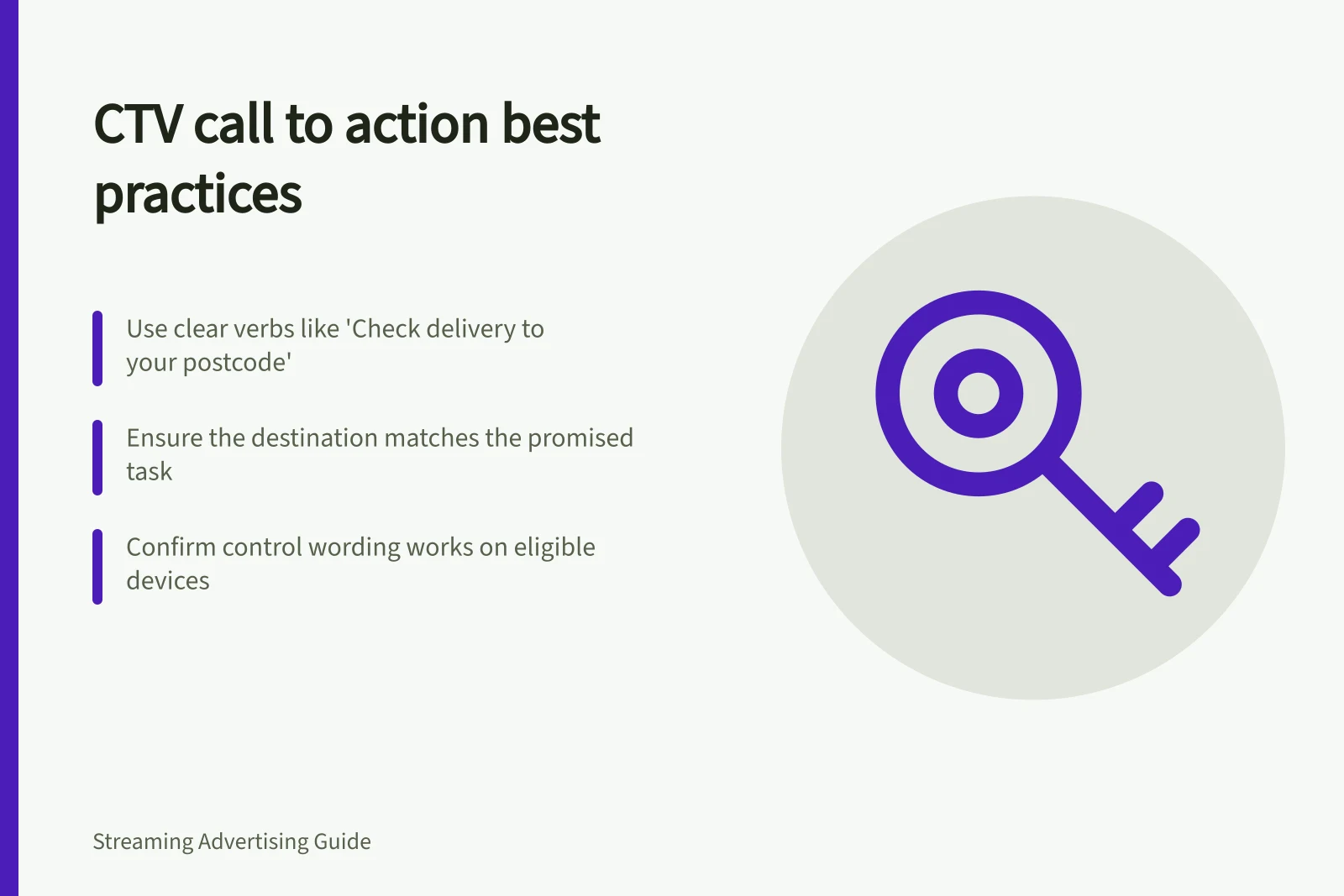
Write one clear CTV next step, match its words to the booked format and make sure the destination fulfils the ad’s promise.
A useful CTV call to action names one next step and gives viewers a reason to take it. Write it around what the booked ad can display and what the destination actually provides. A standard video ad may have no television click; an interactive placement needs its own approved wording.
Name the task
Use a verb that describes what viewers can do: “Compare the sizes”, “Check delivery to your postcode” or “Request a quote”. Those lines are useful only when the destination offers the named task. “Learn more” gives less direction when the ad has already raised a specific question.
Keep one instruction prominent. Several equal-sized requests to scan, search, call and type an address can make the end card difficult to follow.
If a second route is needed, make it serve the same offer without competing with the main instruction. Read the line aloud and check that its essential words remain legible on a television.
Write for the available control
A streaming TV ad is full-screen, non-skippable video. Do not make it look clickable unless the booked treatment actually provides a click. Other formats can support different actions, so confirm the booked treatment before approving the copy.
If a supplier adds a QR overlay, check the words as they appear beside it and confirm that the booked format and device support the overlay.
The instruction should remain understandable wherever the overlay is unavailable.
A remote-control instruction needs the same care. Use wording such as “Press OK” only when the booked format and eligible devices actually present that control. Confirm the displayed wording in a placement preview.
Keep the promise consistent
The destination should deliver the task named in the ad. “Compare the sizes” should lead to the advertised options; “Check delivery” should lead to an available delivery check. Review the first screen viewers reach and make the relationship clear.
Read the call to action with the offer conditions. The ACCC can require businesses to back up claims they make about their products or services, and can investigate and take compliance or enforcement action if a business misleads. If a short line suggests a general offer while material restrictions appear only later, revise the line or the offer presentation.
Before launch, review the finished end card from a normal viewing position and follow each offered route. Check whether the instruction is readable, the supported control appears and the destination starts the promised task.
Key Regulatory & Platform Guidelines
- ACCC Misleading Claims Regulation
- Businesses must back up claims made in ads; enforcement possible
- Amazon Prime Video Ad Specs
- Requires alignment between CTA wording and available interactive features
- Google Ads Guidance
- Ensure CTAs match the destination experience and user journey