Creative Specs
Part of CTV creative experimentation
Comparing a QR response with a non-interactive call to action
Compare QR and plain CTV response treatments with the same offer, eligible delivery and a genuinely common outcome measure.
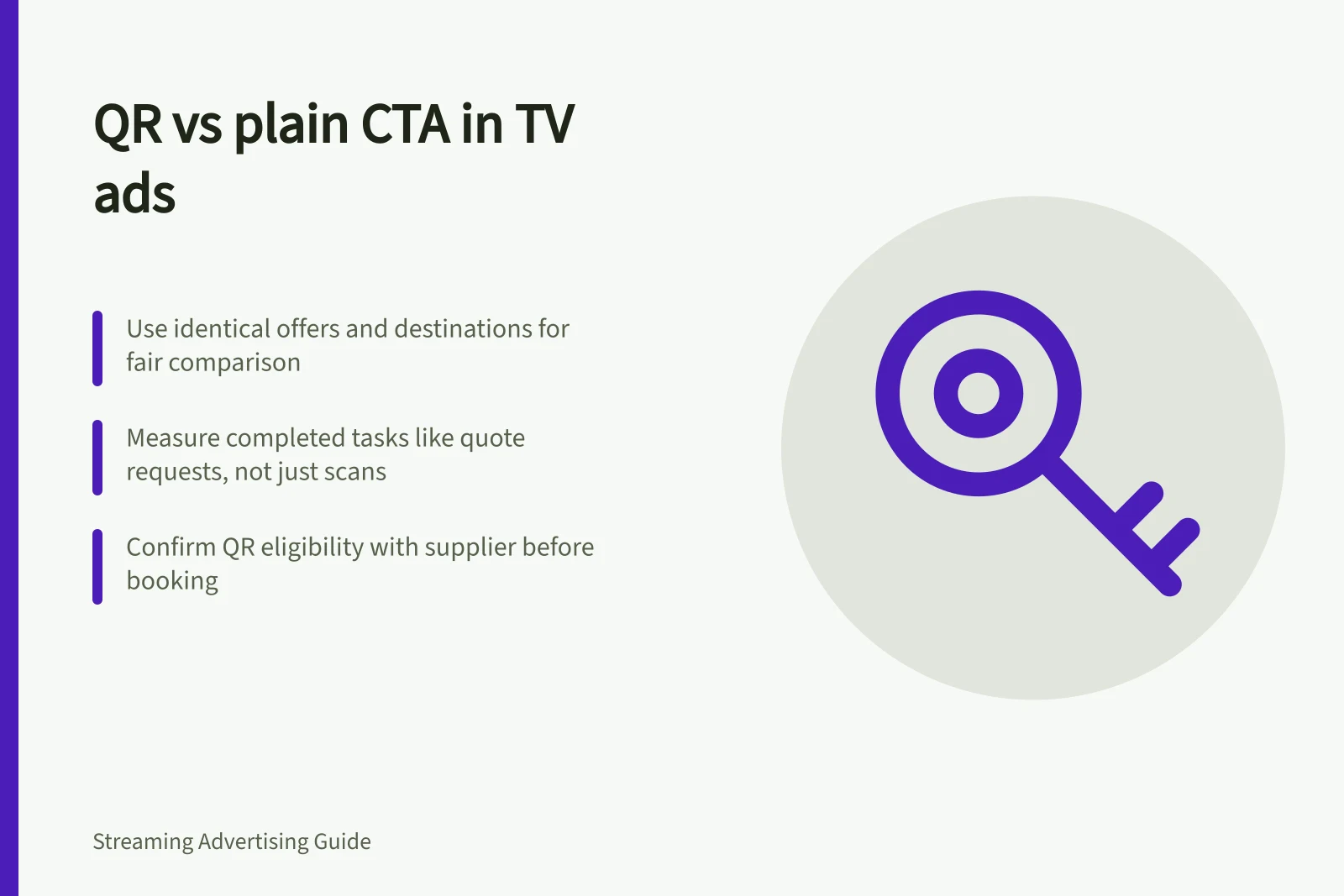
A QR-versus-plain CTV test should ask whether the response treatment changes a useful outcome under comparable conditions. Keep the offer and destination task the same. Scans cannot be the winning metric: the plain version has no code to scan, and a scan is not a completed enquiry or purchase.
Specify both treatments and their eligible screens
Record who supplies the QR code, where and when it appears, and which page it opens. Give the plain version an instruction that works without interaction, such as a memorable address or a searchable offer name. Keep the form, offer conditions and promised task consistent.
Confirm the booked format before producing the variants. QR support and eligibility can vary by campaign type, player and inventory, so confirm availability with the supplier.
Amazon describes its Streaming TV ads as full-screen, non-skippable video ads. Check the booked product's creative requirements before assuming a QR treatment is eligible.
If both treatments can run in the same eligible placement under controlled assignment, the comparison can focus more closely on the response prompt. If they require different products or screens, name the result a comparison of bookable packages and report those differences.
Key Considerations for QR vs Plain CTA Testing in Australia
- Ad Format Eligibility
- Full-screen, non-skippable video ads (Amazon)
- Best Practice
- Use consistent offer, destination, and measurable business outcome
Choose a measure both groups can contribute to
Define the useful action before launch: for example, a completed quote request. Then establish whether it can be measured comparably for both assigned groups. A route-tagged visit or scan identifies use of one path; it cannot reveal all actions prompted by the plain ad.
A credible comparison of total response may require an independent outcome source and an appropriate assignment design, such as suitably planned geographic test groups. Check that the business can record outcomes for those groups and that the groups have enough scale before relying on the design.
| Evidence | What it can show | Main limit |
|---|---|---|
| Eligible delivery by treatment | Where each version could appear | An eligible impression does not prove the QR element was displayed |
| Scans or tagged QR arrivals | Recorded use of that route | No equivalent scan exists for the plain version |
| Dedicated-address use | Requests to that address | It may be remembered or shared without a recorded ad exposure |
| Comparable business outcome | The agreed task across the assigned groups | Requires a credible common measurement and comparison method |
Direct traffic has no clear referral source. A rise in direct sessions during the flight cannot be assigned to the plain ad. Route-use metrics such as QR scan counts are not total response; do not assume they cover every supplier-generated overlay.
Decide what the evidence permits
Request delivered impressions by treatment, placement and device, and the number on which the QR element was actually displayed if the supplier can report it. Review the finished television display and follow each route on a phone before launch; these are checks to perform, not completed tests.
If a common outcome and credible assignment are available, compare the groups with coverage and uncertainty stated. Keep route-use counts as diagnostics.
If only scans, tagged visits and direct traffic are available, report those observations separately and leave the head-to-head response question unresolved. Do not extend a result from QR-capable screens to every booked impression.