
Household Reach
Part of CTV and broader media planning
Comparing CTV reach with existing television coverage
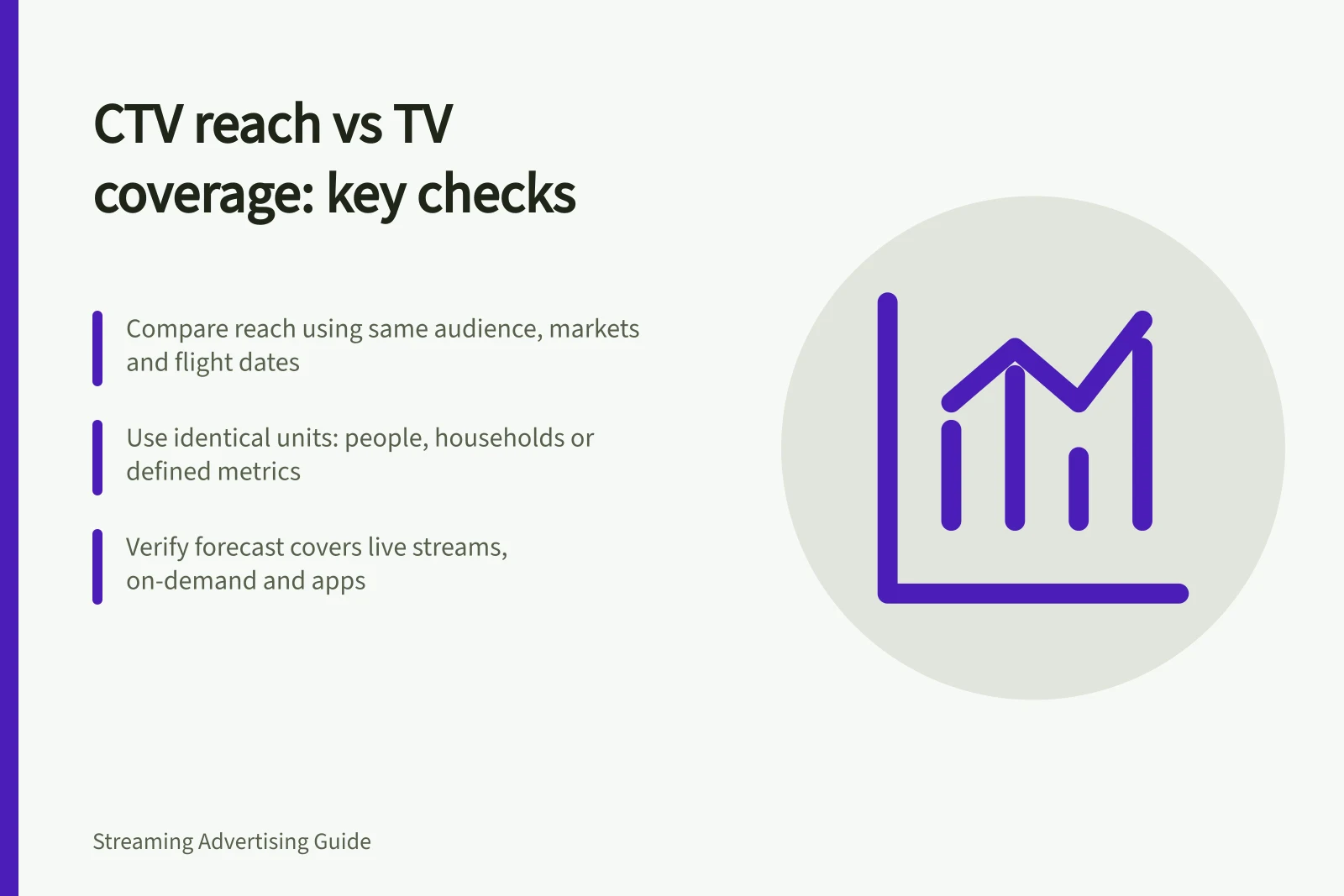
Compare CTV and existing TV reach using matching audiences, dates and units, and check whether an incremental-reach estimate covers the actual buy.
To decide whether a proposed CTV buy extends an existing TV schedule, compare the audience reached by the schedule with the audience expected after adding the specified buy. Two separate reach totals cannot establish the gain: they may use different units or count some of the same people.
Align the proposals before booking
Record the broadcast plan’s target audience, Australian markets, flight dates and reach definition. Request a CTV forecast against the same boundaries. Ask whether that forecast covers TV screens only, and which apps, live streams and on-demand placements it includes. Label a forecast as a forecast; it is not delivered reach.
| Field | Existing TV schedule | CTV proposal |
|---|---|---|
| Audience and area | Defined demographic and markets | Matching demographic and markets |
| Period | Exact flight dates | The same dates |
| Reach unit | People, households or another stated unit | The same unit under a valid comparison method |
| Ad basis | Eligible campaign spots | Eligible campaign impressions |
| Exclusions | Inventory outside the estimate | Apps or devices outside the estimate |
A household estimate cannot be compared directly with a person estimate. A streaming service’s user count is also not the reach forecast for ads available to this advertiser.
Check what an overlap method covers
VOZ Total TV combines broadcast TV and BVOD audience measurement. Its website reports provide de-duplicated national Total TV viewing snapshots for specified demographics. Those reports show viewing patterns, not who saw this advertiser’s ads.
The supplied VOZ guidelines define Total TV as national Broadcast TV and national BVOD, including viewing to live streaming and on demand. They do not establish coverage of other streaming inventory. Ask which inputs, screens and inventory a proposed analysis would actually cover.
Before booking, request a documented combined forecast if one is available for the proposed inventory. The VOZ website reports are predefined viewing reports, not by themselves a pre-booking forecast.
Key Considerations for CTV Reach Forecasting in Australia
- VOZ Total TV Coverage
- National Broadcast TV + National BVOD (live & on-demand)
- Not Covered
- Other streaming inventory (e.g. non-BVOD platforms)
- Forecast Type
- Pre-booking forecast required; VOZ reports are viewing snapshots, not ad reach forecasts
Make the reach decision
Ask for the existing schedule’s estimated reach, the estimated combined reach and the difference, all in the same unit and period. Call the difference incremental reach only within the method’s covered channels. Show exclusions and uncertainty where the method supplies them.
If a suitable combined forecast is unavailable, keep the channel estimates separate and mark overlap unknown. CTV may still have a useful message or viewing role, but the plan should not promise a numerical reach gain it cannot establish. After launch, compare delivered campaign coverage using eligible inputs and state how the result differs from the forecast.


