Household Reach
Part of CTV brand suitability
Recording limitations in a streaming suitability report
Show assessed and unresolved CTV delivery separately, identify the content signal used and qualify the suitability result.
A streaming suitability report should show how much delivered inventory could be assessed against the brand’s policy. State the result for that assessed group, account for the rest of delivery, and explain why any placements remain unresolved.
Show the coverage
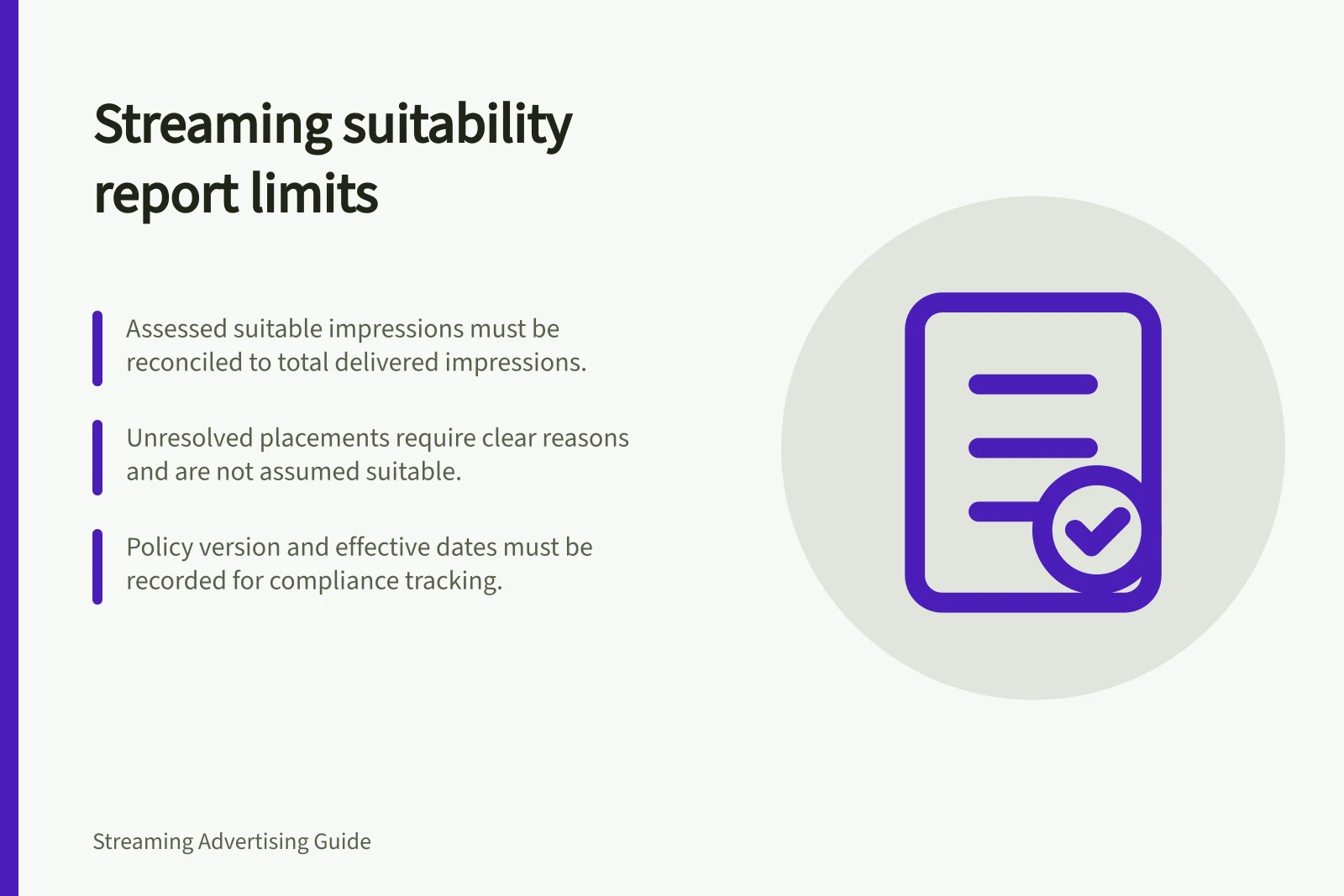
Start with total delivered impressions for a defined period, time zone and inventory scope. Report mutually exclusive counts: impressions assessed as suitable, assessed as unsuitable, and unresolved. Those counts should reconcile to delivered impressions.
Show separately how many had the required content signal. A programme identifier may be present yet still be too ambiguous to apply the policy.
Field / What to record
- Inventory group
- Publisher, app, deal or programme group at the available level
- Delivered
- Impressions in the stated period
- Assessed suitable
- Impressions checked against the named policy version and found suitable
- Assessed unsuitable
- Impressions checked and found outside that policy
- Unresolved
- Impressions that could not be assessed, with reasons
- Method
- Seller classification, buyer rule or independent assessment, where applicable
Calculate any suitability rate using the assessed impressions as its denominator, and show the assessed share of all delivery beside it. An unresolved placement is not evidence that it passed or failed.
State what was checked
Specify whether the assessment used app, channel, programme, episode or finer content information. An app-level check cannot establish the context of an individual programme.
CTV content metadata can include genre and rating, but the actual fields available depend on the supply and reporting path.
Keep preventive controls separate from observed delivery. Report filtered opportunities separately from impressions won.
A filtered opportunity is not a delivered impression later verified as suitable. A settings record likewise shows configuration, not placement-level compliance.
Record changes and exceptions
Name the policy version, effective dates of control changes, approved exceptions and any deal exempted from advertiser-level suitability settings. Give disputed placements their current status.
State the data cut-off and whether late reporting or reclassification may change the figures.
The conclusion should match the evidence: report what was found within the assessed group, its share of delivery and the unresolved share. Do not extend that finding to the whole campaign when programme context was unavailable for some impressions.